Workspaces, a VPN & More - Learn the Newest Microsoft Edge Features

Microsoft Edge continues to redefine user experiences. This is due to Microsoft’s commitment to innovation. The latest updates bring a host of features. These are designed to enhance productivity, security, and browsing satisfaction.

Chrome may have been number one for years. But Edge has been steadily gaining popularity. It is now the third most popular browser worldwide. Overtaking Firefox a while back, it’s now just behind Chrome (1) and Safari (2).

From personalized workspaces to a built-in VPN, Microsoft Edge is not just a browser. It's a comprehensive toolkit for users navigating the digital landscape. Let's delve into the newest Microsoft Edge features. They promise to elevate your online journey.

A New Era of Productivity: Microsoft Edge Workspaces

Introduction to Workspaces

Workspaces in Microsoft Edge represent a paradigm shift. A shift in how users organize and manage their online tasks. Imagine having a dedicated space for each project. One that seamlessly integrates relevant tabs, documents, and websites.

Microsoft Edge Workspaces makes this a reality. It allows users to create custom workspaces. Each workspace represents different aspects of their digital lives. Whether you're working on a project, planning a trip, or pursuing a hobby. Workspaces offer a tailored and organized browsing environment.

Workspaces
Image source: Microsoft

Key Features of Microsoft Edge Workspaces

  1. Personalization: Users can customize Workspaces with a unique name and color. This makes it easier to distinguish between different projects or activities.
  2. Easy Access: With a single click, users can switch between Workspaces. This instantly transitions them between different sets of tabs and online resources. Users associate each Workspace with specific projects or interests.
  3. Persistence: Workspaces keep their configurations. This is the case even when users close and reopen the browser. This ensures that users can seamlessly resume their work. There is no need to reconstruct their customized environments each time.
  4. Efficient Task Management: Workspaces make task-focused browsing easier, minimizing distractions. This helps users maintain focus on the specific project or activity at hand.

Enhanced Security with Edge Secure Network VPN

Built-in VPN

Microsoft Edge takes a giant leap in prioritizing user privacy and security. The Edge Secure Network uses a new built-in VPN. VPNs, or Virtual Private Networks, encrypt internet connections. This helps ensure a secure and private browsing experience. Microsoft Edge now provides users with 5GB of free VPN data per month. This further protects their online presence.

Key Benefits of the VPN in Microsoft Edge

  1. Enhanced Privacy: VPNs mask users' IP addresses. This makes it challenging for malicious actors to track their online activities. This is particularly crucial when accessing public Wi-Fi networks. As well as sensitive information.
  2. Secure Browsing: The VPN has an encrypted connection. This ensures that data transmitted between the user's device and internet is secure. It reduces the risk of interception by hackers.
  3. Geographic Consistency: Edge’s VPN will mask your specific location. Websites will see a location similar to yours. So, when you look up movie times or nearby services, you see what you expect. You cannot choose a specific region to route traffic from.
  4. Complimentary 5GB Data: Microsoft Edge users receive 5GB of free VPN data each month. To conserve the data limit, content streaming sites aren’t routed through the VPN. These are sites like Netflix, Hulu, Disney+, etc.

Other New Features Added to Microsoft Edge Browser

Microsoft is continuously updating Edge. Here are a few more new features you can enjoy.

  1. Autofill for Forms: Edge makes filling out forms online easier. It will suggest completions when you start typing into fields. This includes name, email, address, etc.
  2. Web Capture: Using Web Capture in Edge makes it easy to take a screenshot. You can select an area or a full page. Then paste it into any of your files.
  3. Copilot: Use the Copilot icon at the top of Edge to access AI features. This includes creating AI-generated images as well as creating quick email drafts and more.
  4. Read Aloud: Need to step away from the screen for a moment? Let Edge read content for you out loud. Enabling you to multi-task like there’s no tomorrow!

Get Help Exploring Your Microsoft Services

Microsoft Edge establishes itself as a comprehensive solution. It’s great for those seeking a more productivity-focused browser. As well as a secure and private online environment. Microsoft Edge's latest features enhance the way we work, explore, and connect.

Is your company in need of help exploring what Microsoft has to offer? From Edge enhancements to Microsoft 365 tools, we have experts to guide you.

Don’t miss out on all that these solutions have to offer. Our Microsoft experts can help set up, manage, and secure your digital workflows.

Give us a call today to schedule a chat.

--
Featured Image Credit

This Article has been Republished with Permission from The Technology Press.

Cyber security experts issue warning about the high risk of Temu's cash giveaway

Cyber security experts have issued a warning against Chinese online marketplace megalith Temu's 'very dangerous' cash giveaway, claiming that it could lead to serious fraud. 

The retailer is offering users 'free' cash in exchange for new sign-ups - and hundreds of people are jumping on the bandwagon.

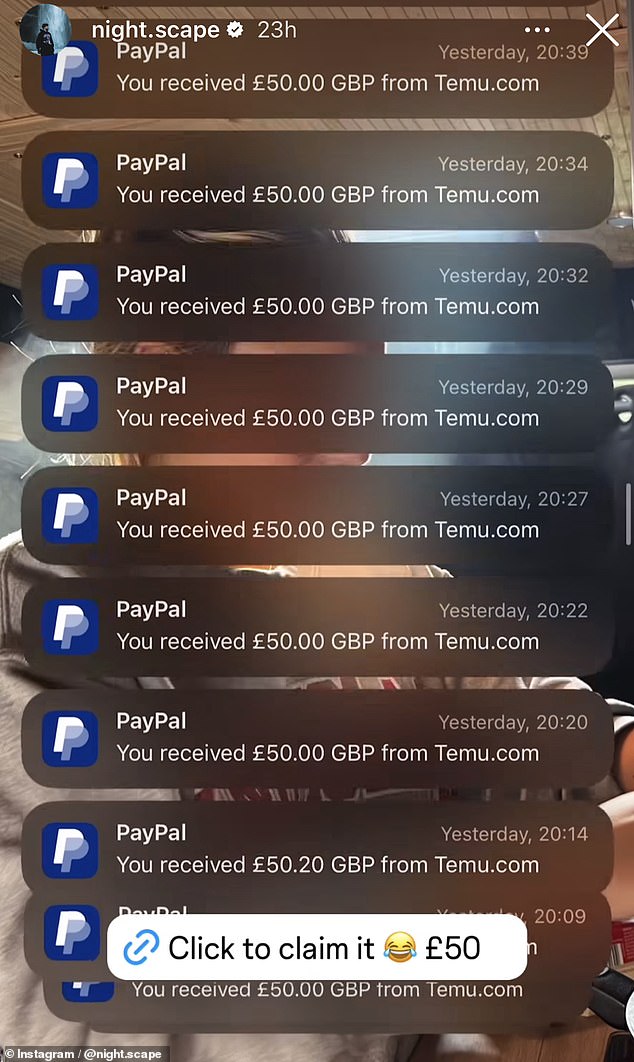
Screenshots of multiple £50 payments going into social media users PayPal accounts have been plastered across the internet, as they prompt others to make the most of the unusual deal. 

The shopping website, which sells extremely cheap goods sent directly to users from China from wholesalers, is running a promotion offering a combination of cash and store credit in exchange for new members joining up - allegedly all people need to do to start getting rewards is to get new users to click on their sign up link.

However, there are concerns that people entering the promotion could have their information 'sold' to advertisers with the giveaway being dubbed 'too good to be true'. 
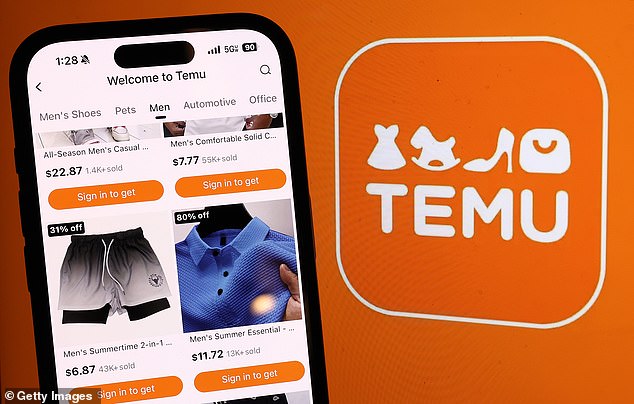
Chinese online marketplace megalith Temu is running a giveaway offering users 'free' cash in exchange for new sign-ups - and hundreds of people are jumping on the bandwagon

MailOnline spoke to cyber security experts to find out if there are any risks associated with the controversial promotion and whether it's safe to sign up. 

Jake Moore, Global Cyber Security Advisor at ESET, warns that the cash is 'not free' and giving away your data for money can be 'very dangerous down the line'.

He explained: 'This app is effectively offering money, not for free, but it's offering money in exchange for personal data and device data.

'Most apps require some sort of data to function. It's really important to pay attention to all submissions requested by these apps.

'Some apps can be sneakier than others and some request more than others. Data is the new currency and it has been for a little while now.

'When companies trade in data, that personal data can be analysed, which might not sound too bad. But when it gets shared, it can be damaging further down the line.'

The expert added: 'In extreme cases, it can even be used for identity fraud because if that data is compromised, it can be very dangerous for those people that have given their data away.

'They have given their data away freely, so they're not being conned out of it. It will all be written down in the terms and conditions but of course, people aren't reading those. 

Jake Moore, Global Cyber Security Advisor at ESET, warns that the cash is 'not free' and giving away your data for money can be 'very dangerous down the line'

'They're just seeing the end goal of of being offered £50 to access that data. So I think rightly so people are beginning to question if they should have given their data away for payments.'

He explained that cybercriminals are 'very good at pretending to be whoever they want to be' and the data could allow them to know things about you they wouldn't otherwise, causing you to think they are genuine.

Jake told MailOnline: 'In theory, Temu is a Chinese app and it may be allowed to share its company data with the Chinese government. That can be a worry, because with most companies, when they say that the data won't be seen anywhere else, you can rest assured that it shouldn't be.

'But when they have different laws in different countries that may in their country legally allow access if required, then it can be a worry. 

'So, for example, criminals could get hold of that data potentially and use it to phish people. So this could be phishing emails or texts, or even voice calls where they purport to be from your bank.

'Once you let your guard down, this is where they may be able to force you into moving your money, or they might force you into handing over a password or a two-factor authentication code to them, purely because they knew some personal details about you.'

The warning comes just as the UK and US identified China as the source of a wave of cyberattacks on public figures and institutions.

The rules in the 'Cash Reward' promotion state users agree to give Temu permission to use their 'photo, name likeness, voice, opinions, statements, biographical information, and/or hometown and state' worldwide. 

Mark Wilshaw, Cyber Security Services Manager at SYTECH, also chimed into the debate.
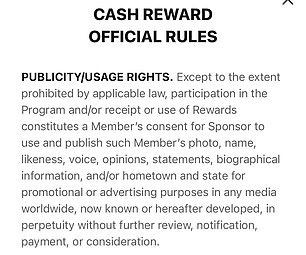
The terms for the contest warn that users surrender their 'photo, name, likeness, voice, opinions, statements' and other personal information

They are processed in accordance with Temu's privacy policy, which says personal information can be shared or 'sold' to third parties

Flashy graphics tell users that the free money is within their grasp - as long as they get some friends to join Temu as well

Screenshots of multiple £50 payments going into social medias users PayPal accounts have been plastered across the internet, as they prompt others to make the most of the unusual deal

He said: 'The level of personal information that is required to enter the giveaway, coupled with their rules leads to a risk to both privacy and security. 

'The recorded personal information can be sold to marketing companies who will then bombard you with spam contact.

'It is usual for businesses to sell some information - however, it is not normal practice for personal information such as a photograph and or a voice to be sold too. 

'With a photograph and voice, potential unscrupulous businesses or individuals can be even more convincing with attempts to steal identities. 

'Also, depending upon the types of photographs and voice samples in question, it may be possible to further exploit individuals through deepfaking and similar technologies.'

The expert insists that he 'would recommend not participating in these kinds of promotions'. 

He advised: 'You have to ask yourself, is the deal too good to be true? How much value do you put on your personal information? How much will becoming a victim of fraud cost you? 

'It is easy to focus on a free cash offer but the value is never high enough to compensate for the potential damage.' 

However, the terms and conditions that are concerning people are not exclusive to Temu.

People have taken to X (formerly Twitter) to discuss the controversial giveaway

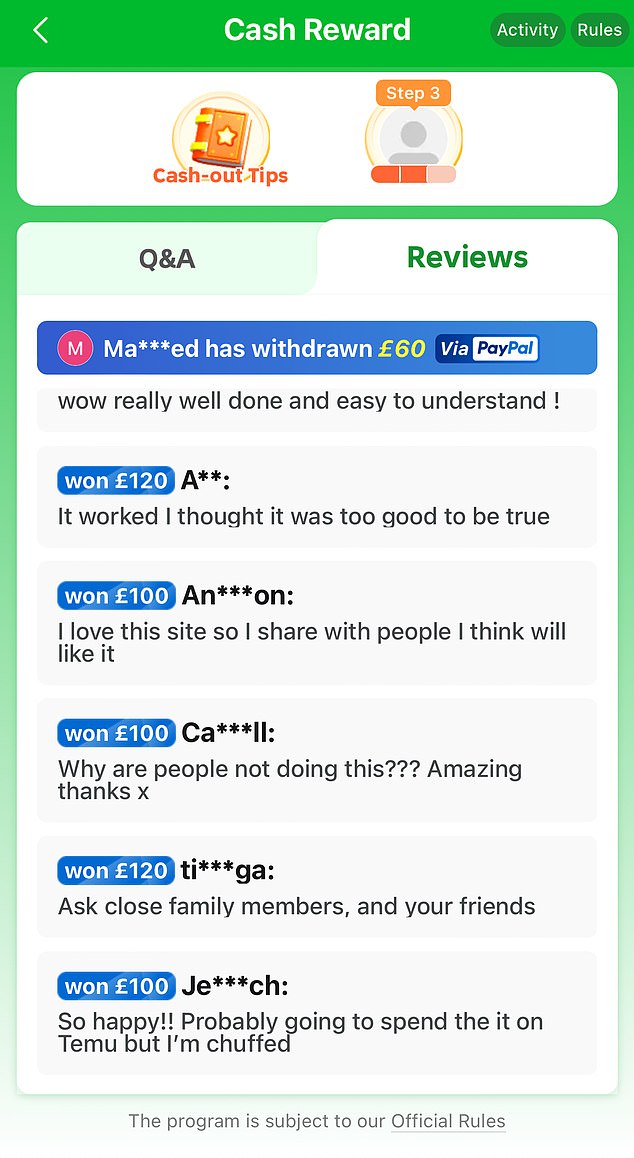
The app features what it says are reviews from competition winners who have managed to claim the free money

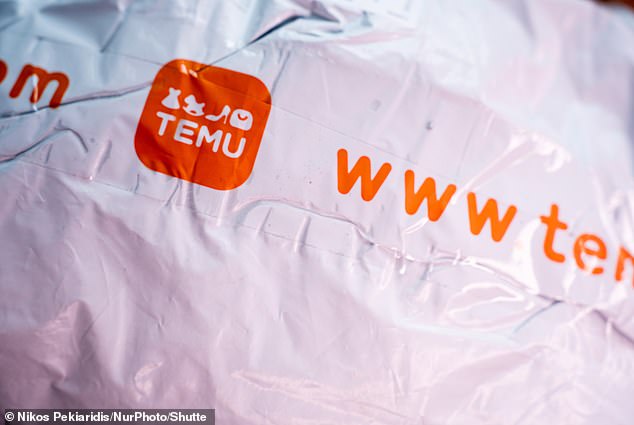
Temu's distinctive packaging often appears on social media - including TikTok, where users show off their budget 'hauls' of cut-price goods

Other retailers such as Shein, McDonald's and Subway have similar small print for their competitions.

McDonald’s FANnual Report Sweepstakes competition terms and conditions say: 'By participating in the Sweepstakes, each verified winner hereby agrees and grants Sponsor the right, but not the obligation, to the use of their name, voice and likeness, along with their address (city and state)'.

Additionally, Temu's competitor Shein also have giveaways with these kinds of conditions, including: 'the winners’ consent for use of his/her Photo, name, likeness, voice, opinions, statements, biographical information'.

Temu's privacy policy states that it can share personal information with third parties such as advertisers. 

The site insists that it does not 'sell' user data - but admits that in some countries, the sharing of data is considered 'selling'.

The policy reads: 'At Temu, we care deeply about privacy. While Temu shares your personal information for the purposes of targeted advertising, which may be considered a "sale" under applicable privacy laws, Temu does not "sell" personal information in the traditional sense.'

But, cyber security expert Tom insists that this is a 'really good opportunity for people to think about what data they're giving away'.

Adrianus Warmenhoven, a cyber security expert at NordVPN, comments: 'The scheme bears all the red flags of a phishing scam, luring consumers with a dubious link promising a £50 PayPal credit. 

'But while such offers typically ring alarm bells, reports indicate some individuals have reaped substantial sums.

'Though the offer may be genuine, consumers need to understand what they are gambling with. Surrendering personal data without understanding its purpose or potential repercussions exposes them to grave risks - be it falling victim to cybercrime or identity theft.

'This costly marketing tactic employed by the Chinese online marketplace has undeniably attracted a surge of new users. However, concerns linger over Temu's past allegations of data harvesting through app malware, raising fears of data monetisation.'

Temu's privacy policy states that it can share personal information with third parties such as advertisers

She adds: 'You have to stop and ask yourself ‘Why is my data so valuable to them?’ and really consider if the deal is worth it in the long run. 

'Temu is well-known for its ‘spin the wheel’ style offers when you first open the app, but remember that the company isn’t a charity. It is hell-bent on making profits and will use your data to its full advantage.

'While the promise of a swift £50 may be tempting, the stakes of compromising sensitive information far outweigh the reward.'

After being approached by MailOnline, Temu has updated its Cash Reward campaign Terms & Conditions to clarify the limited ways Temu uses customer data - 'to publish just the name and profile picture of the consumer’s name participating in the campaign in promotional content'.

A Temu spokesperson told MailOnline: 'Like many other companies, Temu employs a variety of marketing strategies to attract new customers. 

'Our Cash Reward program offers a referral incentive – a common customer acquisition method used across industries.

'Some participants have expressed concern about the promotion's Terms & Conditions (T&Cs). 

'To reassure our customers, we've revised the T&Cs to clearly specify the minimal information used: usernames and profile pictures for referral notifications and winner announcements. 

'The previous terms and conditions had inadvertently included promotional uses that Temu does not engage in.

'At Temu, safeguarding privacy and maintaining transparency in our data practices are core values. 

'We collect minimal information solely to provide and continually enhance our services for our users. We value customers' trust and feedback. We do not and will not sell customer data.

'Temu operates under strict data privacy and security standards. Our app is independently certified by Germany's Dekra to meet the OWASP MASVS (Mobile Application Security Verification Standard), the industry standard for mobile app security.

'In addition, Temu runs a bug bounty program with the leading cybersecurity firm Hacker. One and has implemented multi-factor authentication to safeguard user access. All transactions are encrypted according to Payment Card Industry (Data Security Standard) protocols.

'Temu stands firmly against phishing and identity theft. We have taken legal action against websites and apps that impersonated our brand in order to protect our customers and ensure a secure shopping environment. 

'We are a member of the Anti-Phishing Working Group (APWG), a global coalition dedicated to fighting phishing and cybercrime, whose members include companies like Microsoft, PayPal, top cybersecurity firms Symantec and McAfee, and governmental agencies.

'Temu has never provided user data to the Chinese government, nor would it do so if asked.'

Cyber security experts have raised concerns about a cash giveaway promotion by Chinese online marketplace Temu, warning that it could lead to fraud. The retailer is offering users cash in exchange for new sign-ups, prompting many to participate. Screenshots of payments going into users' PayPal accounts have been shared online, but experts caution that giving away personal data for money can be risky.

Jake Moore, a Global Cyber Security Advisor at ESET, explains that while the cash may seem enticing, it comes at the cost of personal and device data. This data can be used for identity fraud or phishing attacks, posing a serious risk to individuals. Temu's promotion requires users to agree to share their personal information, raising privacy and security concerns.

Mark Wilshaw, Cyber Security Services Manager at SYTECH, also warns about the risks associated with surrendering personal information for rewards. He highlights the potential for data exploitation by marketing companies or individuals seeking to steal identities. The terms and conditions of Temu's promotion state that users grant permission for their information to be used globally.

Other retailers like Shein, McDonald's, and Subway have similar conditions for their promotions, indicating a common practice in the industry. Temu's privacy policy states that while they share personal information for targeted advertising, they do not sell user data in the traditional sense. However, experts urge caution and advise against participating in promotions that require extensive personal information.

After receiving feedback, Temu updated its Terms & Conditions for the Cash Reward campaign to clarify how customer data is used. The company emphasizes its commitment to privacy and transparency in data practices, stating that user trust is a priority. Temu asserts that it operates under strict data privacy and security standards to protect user information from phishing and identity theft.

In conclusion, experts recommend carefully considering the risks before participating in promotions that require extensive personal information. The allure of quick cash rewards may not outweigh the potential consequences of compromising sensitive data. Users are advised to prioritize their privacy and security when engaging with such promotions.

Cyber Security Experts Issue Warning About Temu's High-Risk Cash Giveaway

Cyber security experts have issued a warning against Chinese online marketplace megalith Temu's 'very dangerous' cash giveaway, claiming that it could lead to serious fraud. 

The retailer is offering users 'free' cash in exchange for new sign-ups - and hundreds of people are jumping on the bandwagon.

Screenshots of multiple £50 payments going into social media users PayPal accounts have been plastered across the internet, as they prompt others to make the most of the unusual deal. 

The shopping website, which sells extremely cheap goods sent directly to users from China from wholesalers, is running a promotion offering a combination of cash and store credit in exchange for new members joining up - allegedly all people need to do to start getting rewards is to get new users to click on their sign up link.

However, there are concerns that people entering the promotion could have their information 'sold' to advertisers with the giveaway being dubbed 'too good to be true'. 

Chinese online marketplace megalith Temu is running a giveaway offering users 'free' cash in exchange for new sign-ups - and hundreds of people are jumping on the bandwagon

MailOnline spoke to cyber security experts to find out if there are any risks associated with the controversial promotion and whether it's safe to sign up. 

Jake Moore, Global Cyber Security Advisor at ESET, warns that the cash is 'not free' and giving away your data for money can be 'very dangerous down the line'.

He explained: 'This app is effectively offering money, not for free, but it's offering money in exchange for personal data and device data.

'Most apps require some sort of data to function. It's really important to pay attention to all submissions requested by these apps.

'Some apps can be sneakier than others and some request more than others. Data is the new currency and it has been for a little while now.

'When companies trade in data, that personal data can be analysed, which might not sound too bad. But when it gets shared, it can be damaging further down the line.'

The expert added: 'In extreme cases, it can even be used for identity fraud because if that data is compromised, it can be very dangerous for those people that have given their data away.

'They have given their data away freely, so they're not being conned out of it. It will all be written down in the terms and conditions but of course, people aren't reading those. 

Jake Moore, Global Cyber Security Advisor at ESET, warns that the cash is 'not free' and giving away your data for money can be 'very dangerous down the line'

'They're just seeing the end goal of of being offered £50 to access that data. So I think rightly so people are beginning to question if they should have given their data away for payments.'

He explained that cybercriminals are 'very good at pretending to be whoever they want to be' and the data could allow them to know things about you they wouldn't otherwise, causing you to think they are genuine.

Jake told MailOnline: 'In theory, Temu is a Chinese app and it may be allowed to share its company data with the Chinese government. That can be a worry, because with most companies, when they say that the data won't be seen anywhere else, you can rest assured that it shouldn't be.

'But when they have different laws in different countries that may in their country legally allow access if required, then it can be a worry. 

'So, for example, criminals could get hold of that data potentially and use it to phish people. So this could be phishing emails or texts, or even voice calls where they purport to be from your bank.

'Once you let your guard down, this is where they may be able to force you into moving your money, or they might force you into handing over a password or a two-factor authentication code to them, purely because they knew some personal details about you.'

The warning comes just as the UK and US identified China as the source of a wave of cyberattacks on public figures and institutions.

The rules in the 'Cash Reward' promotion state users agree to give Temu permission to use their 'photo, name likeness, voice, opinions, statements, biographical information, and/or hometown and state' worldwide. 

Mark Wilshaw, Cyber Security Services Manager at SYTECH, also chimed into the debate.
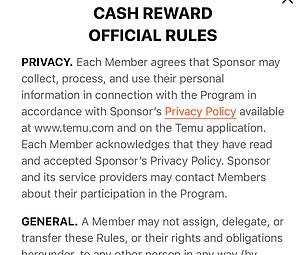
The terms for the contest warn that users surrender their 'photo, name, likeness, voice, opinions, statements' and other personal information

They are processed in accordance with Temu's privacy policy, which says personal information can be shared or 'sold' to third parties

Flashy graphics tell users that the free money is within their grasp - as long as they get some friends to join Temu as well

Screenshots of multiple £50 payments going into social medias users PayPal accounts have been plastered across the internet, as they prompt others to make the most of the unusual deal

He said: 'The level of personal information that is required to enter the giveaway, coupled with their rules leads to a risk to both privacy and security. 

'The recorded personal information can be sold to marketing companies who will then bombard you with spam contact.

'It is usual for businesses to sell some information - however, it is not normal practice for personal information such as a photograph and or a voice to be sold too. 

'With a photograph and voice, potential unscrupulous businesses or individuals can be even more convincing with attempts to steal identities. 

'Also, depending upon the types of photographs and voice samples in question, it may be possible to further exploit individuals through deepfaking and similar technologies.'

The expert insists that he 'would recommend not participating in these kinds of promotions'. 

He advised: 'You have to ask yourself, is the deal too good to be true? How much value do you put on your personal information? How much will becoming a victim of fraud cost you? 

'It is easy to focus on a free cash offer but the value is never high enough to compensate for the potential damage.' 

However, the terms and conditions that are concerning people are not exclusive to Temu.

People have taken to X (formerly Twitter) to discuss the controversial giveaway

The app features what it says are reviews from competition winners who have managed to claim the free money

Temu's distinctive packaging often appears on social media - including TikTok, where users show off their budget 'hauls' of cut-price goods

Other retailers such as Shein, McDonald's and Subway have similar small print for their competitions.

McDonald’s FANnual Report Sweepstakes competition terms and conditions say: 'By participating in the Sweepstakes, each verified winner hereby agrees and grants Sponsor the right, but not the obligation, to the use of their name, voice and likeness, along with their address (city and state)'.

Additionally, Temu's competitor Shein also have giveaways with these kinds of conditions, including: 'the winners’ consent for use of his/her Photo, name, likeness, voice, opinions, statements, biographical information'.

Temu's privacy policy states that it can share personal information with third parties such as advertisers. 

The site insists that it does not 'sell' user data - but admits that in some countries, the sharing of data is considered 'selling'.

The policy reads: 'At Temu, we care deeply about privacy. While Temu shares your personal information for the purposes of targeted advertising, which may be considered a "sale" under applicable privacy laws, Temu does not "sell" personal information in the traditional sense.'

But, cyber security expert Tom insists that this is a 'really good opportunity for people to think about what data they're giving away'.

Adrianus Warmenhoven, a cyber security expert at NordVPN, comments: 'The scheme bears all the red flags of a phishing scam, luring consumers with a dubious link promising a £50 PayPal credit. 

'But while such offers typically ring alarm bells, reports indicate some individuals have reaped substantial sums.

'Though the offer may be genuine, consumers need to understand what they are gambling with. Surrendering personal data without understanding its purpose or potential repercussions exposes them to grave risks - be it falling victim to cybercrime or identity theft.

'This costly marketing tactic employed by the Chinese online marketplace has undeniably attracted a surge of new users. However, concerns linger over Temu's past allegations of data harvesting through app malware, raising fears of data monetisation.'

Temu's privacy policy states that it can share personal information with third parties such as advertisers

She adds: 'You have to stop and ask yourself ‘Why is my data so valuable to them?’ and really consider if the deal is worth it in the long run. 

'Temu is well-known for its ‘spin the wheel’ style offers when you first open the app, but remember that the company isn’t a charity. It is hell-bent on making profits and will use your data to its full advantage.

'While the promise of a swift £50 may be tempting, the stakes of compromising sensitive information far outweigh the reward.'

After being approached by MailOnline, Temu has updated its Cash Reward campaign Terms & Conditions to clarify the limited ways Temu uses customer data - 'to publish just the name and profile picture of the consumer’s name participating in the campaign in promotional content'.

A Temu spokesperson told MailOnline: 'Like many other companies, Temu employs a variety of marketing strategies to attract new customers. 

'Our Cash Reward program offers a referral incentive – a common customer acquisition method used across industries.

'Some participants have expressed concern about the promotion's Terms & Conditions (T&Cs). 

'To reassure our customers, we've revised the T&Cs to clearly specify the minimal information used: usernames and profile pictures for referral notifications and winner announcements. 

'The previous terms and conditions had inadvertently included promotional uses that Temu does not engage in.

'At Temu, safeguarding privacy and maintaining transparency in our data practices are core values. 

'We collect minimal information solely to provide and continually enhance our services for our users. We value customers' trust and feedback. We do not and will not sell customer data.

'Temu operates under strict data privacy and security standards. Our app is independently certified by Germany's Dekra to meet the OWASP MASVS (Mobile Application Security Verification Standard), the industry standard for mobile app security.

'In addition, Temu runs a bug bounty program with the leading cybersecurity firm Hacker. One and has implemented multi-factor authentication to safeguard user access. All transactions are encrypted according to Payment Card Industry (Data Security Standard) protocols.

'Temu stands firmly against phishing and identity theft. We have taken legal action against websites and apps that impersonated our brand in order to protect our customers and ensure a secure shopping environment. 

'We are a member of the Anti-Phishing Working Group (APWG), a global coalition dedicated to fighting phishing and cybercrime, whose members include companies like Microsoft, PayPal, top cybersecurity firms Symantec and McAfee, and governmental agencies.

'Temu has never provided user data to the Chinese government, nor would it do so if asked.'

Cyber security experts are warning against a cash giveaway by Chinese online marketplace Temu, calling it 'very dangerous' and potentially leading to fraud. The retailer is offering 'free' cash in exchange for new sign-ups, prompting concerns about personal data being sold to advertisers. Experts caution that giving away data for money can be risky, as it can lead to identity fraud and other dangers down the line.

Jake Moore, a Global Cyber Security Advisor, emphasizes the importance of paying attention to data requested by apps, as data is valuable currency that can be misused if shared. He warns that giving away personal data for cash can have serious consequences, including identity theft.

Mark Wilshaw, a Cyber Security Services Manager, also raises concerns about the level of personal information required for the giveaway and the potential risks to privacy and security. He advises against participating in such promotions, as the value of personal information outweighs any cash rewards.

Temu's privacy policy states that personal information may be shared with third parties, raising further concerns about data security and potential misuse. Experts urge consumers to consider the risks of surrendering personal data for monetary gain and to be cautious about deals that seem too good to be true.

After concerns were raised, Temu updated its Cash Reward campaign Terms & Conditions to clarify how customer data is used. The company reassured customers that minimal information is collected for promotional purposes and that data privacy and security are top priorities.

Overall, experts advise consumers to be cautious about sharing personal data for financial incentives and to consider the long-term consequences of such deals. Data privacy and security should be top priorities when engaging with online promotions and giveaways.

Cyber security experts issue warning about Temu's risky cash giveaway

Cyber security experts have issued a warning against Chinese online marketplace megalith Temu's 'very dangerous' cash giveaway, claiming that it could lead to serious fraud. 

The retailer is offering users 'free' cash in exchange for new sign-ups - and hundreds of people are jumping on the bandwagon.

Screenshots of multiple £50 payments going into social media users PayPal accounts have been plastered across the internet, as they prompt others to make the most of the unusual deal. 

The shopping website, which sells extremely cheap goods sent directly to users from China from wholesalers, is running a promotion offering a combination of cash and store credit in exchange for new members joining up - allegedly all people need to do to start getting rewards is to get new users to click on their sign up link.

However, there are concerns that people entering the promotion could have their information 'sold' to advertisers with the giveaway being dubbed 'too good to be true'. 

Chinese online marketplace megalith Temu is running a giveaway offering users 'free' cash in exchange for new sign-ups - and hundreds of people are jumping on the bandwagon

MailOnline spoke to cyber security experts to find out if there are any risks associated with the controversial promotion and whether it's safe to sign up. 

Jake Moore, Global Cyber Security Advisor at ESET, warns that the cash is 'not free' and giving away your data for money can be 'very dangerous down the line'.

He explained: 'This app is effectively offering money, not for free, but it's offering money in exchange for personal data and device data.

'Most apps require some sort of data to function. It's really important to pay attention to all submissions requested by these apps.

'Some apps can be sneakier than others and some request more than others. Data is the new currency and it has been for a little while now.

'When companies trade in data, that personal data can be analysed, which might not sound too bad. But when it gets shared, it can be damaging further down the line.'

The expert added: 'In extreme cases, it can even be used for identity fraud because if that data is compromised, it can be very dangerous for those people that have given their data away.

'They have given their data away freely, so they're not being conned out of it. It will all be written down in the terms and conditions but of course, people aren't reading those. 

Jake Moore, Global Cyber Security Advisor at ESET, warns that the cash is 'not free' and giving away your data for money can be 'very dangerous down the line'

'They're just seeing the end goal of of being offered £50 to access that data. So I think rightly so people are beginning to question if they should have given their data away for payments.'

He explained that cybercriminals are 'very good at pretending to be whoever they want to be' and the data could allow them to know things about you they wouldn't otherwise, causing you to think they are genuine.

Jake told MailOnline: 'In theory, Temu is a Chinese app and it may be allowed to share its company data with the Chinese government. That can be a worry, because with most companies, when they say that the data won't be seen anywhere else, you can rest assured that it shouldn't be.

'But when they have different laws in different countries that may in their country legally allow access if required, then it can be a worry. 

'So, for example, criminals could get hold of that data potentially and use it to phish people. So this could be phishing emails or texts, or even voice calls where they purport to be from your bank.

'Once you let your guard down, this is where they may be able to force you into moving your money, or they might force you into handing over a password or a two-factor authentication code to them, purely because they knew some personal details about you.'

The warning comes just as the UK and US identified China as the source of a wave of cyberattacks on public figures and institutions.

The rules in the 'Cash Reward' promotion state users agree to give Temu permission to use their 'photo, name likeness, voice, opinions, statements, biographical information, and/or hometown and state' worldwide. 

Mark Wilshaw, Cyber Security Services Manager at SYTECH, also chimed into the debate.

The terms for the contest warn that users surrender their 'photo, name, likeness, voice, opinions, statements' and other personal information

They are processed in accordance with Temu's privacy policy, which says personal information can be shared or 'sold' to third parties

Flashy graphics tell users that the free money is within their grasp - as long as they get some friends to join Temu as well

Screenshots of multiple £50 payments going into social medias users PayPal accounts have been plastered across the internet, as they prompt others to make the most of the unusual deal

He said: 'The level of personal information that is required to enter the giveaway, coupled with their rules leads to a risk to both privacy and security. 

'The recorded personal information can be sold to marketing companies who will then bombard you with spam contact.

'It is usual for businesses to sell some information - however, it is not normal practice for personal information such as a photograph and or a voice to be sold too. 

'With a photograph and voice, potential unscrupulous businesses or individuals can be even more convincing with attempts to steal identities. 

'Also, depending upon the types of photographs and voice samples in question, it may be possible to further exploit individuals through deepfaking and similar technologies.'

The expert insists that he 'would recommend not participating in these kinds of promotions'. 

He advised: 'You have to ask yourself, is the deal too good to be true? How much value do you put on your personal information? How much will becoming a victim of fraud cost you? 

'It is easy to focus on a free cash offer but the value is never high enough to compensate for the potential damage.' 

However, the terms and conditions that are concerning people are not exclusive to Temu.

People have taken to X (formerly Twitter) to discuss the controversial giveaway

The app features what it says are reviews from competition winners who have managed to claim the free money

Temu's distinctive packaging often appears on social media - including TikTok, where users show off their budget 'hauls' of cut-price goods

Other retailers such as Shein, McDonald's and Subway have similar small print for their competitions.

McDonald’s FANnual Report Sweepstakes competition terms and conditions say: 'By participating in the Sweepstakes, each verified winner hereby agrees and grants Sponsor the right, but not the obligation, to the use of their name, voice and likeness, along with their address (city and state)'.

Additionally, Temu's competitor Shein also have giveaways with these kinds of conditions, including: 'the winners’ consent for use of his/her Photo, name, likeness, voice, opinions, statements, biographical information'.

Temu's privacy policy states that it can share personal information with third parties such as advertisers. 

The site insists that it does not 'sell' user data - but admits that in some countries, the sharing of data is considered 'selling'.

The policy reads: 'At Temu, we care deeply about privacy. While Temu shares your personal information for the purposes of targeted advertising, which may be considered a "sale" under applicable privacy laws, Temu does not "sell" personal information in the traditional sense.'

But, cyber security expert Tom insists that this is a 'really good opportunity for people to think about what data they're giving away'.

Adrianus Warmenhoven, a cyber security expert at NordVPN, comments: 'The scheme bears all the red flags of a phishing scam, luring consumers with a dubious link promising a £50 PayPal credit. 

'But while such offers typically ring alarm bells, reports indicate some individuals have reaped substantial sums.

'Though the offer may be genuine, consumers need to understand what they are gambling with. Surrendering personal data without understanding its purpose or potential repercussions exposes them to grave risks - be it falling victim to cybercrime or identity theft.

'This costly marketing tactic employed by the Chinese online marketplace has undeniably attracted a surge of new users. However, concerns linger over Temu's past allegations of data harvesting through app malware, raising fears of data monetisation.'
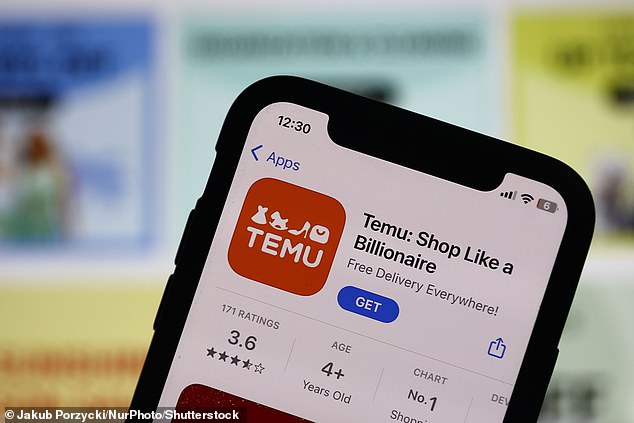
Temu's privacy policy states that it can share personal information with third parties such as advertisers

She adds: 'You have to stop and ask yourself ‘Why is my data so valuable to them?’ and really consider if the deal is worth it in the long run. 

'Temu is well-known for its ‘spin the wheel’ style offers when you first open the app, but remember that the company isn’t a charity. It is hell-bent on making profits and will use your data to its full advantage.

'While the promise of a swift £50 may be tempting, the stakes of compromising sensitive information far outweigh the reward.'

After being approached by MailOnline, Temu has updated its Cash Reward campaign Terms & Conditions to clarify the limited ways Temu uses customer data - 'to publish just the name and profile picture of the consumer’s name participating in the campaign in promotional content'.

A Temu spokesperson told MailOnline: 'Like many other companies, Temu employs a variety of marketing strategies to attract new customers. 

'Our Cash Reward program offers a referral incentive – a common customer acquisition method used across industries.

'Some participants have expressed concern about the promotion's Terms & Conditions (T&Cs). 

'To reassure our customers, we've revised the T&Cs to clearly specify the minimal information used: usernames and profile pictures for referral notifications and winner announcements. 

'The previous terms and conditions had inadvertently included promotional uses that Temu does not engage in.

'At Temu, safeguarding privacy and maintaining transparency in our data practices are core values. 

'We collect minimal information solely to provide and continually enhance our services for our users. We value customers' trust and feedback. We do not and will not sell customer data.

'Temu operates under strict data privacy and security standards. Our app is independently certified by Germany's Dekra to meet the OWASP MASVS (Mobile Application Security Verification Standard), the industry standard for mobile app security.

'In addition, Temu runs a bug bounty program with the leading cybersecurity firm Hacker. One and has implemented multi-factor authentication to safeguard user access. All transactions are encrypted according to Payment Card Industry (Data Security Standard) protocols.

'Temu stands firmly against phishing and identity theft. We have taken legal action against websites and apps that impersonated our brand in order to protect our customers and ensure a secure shopping environment. 

'We are a member of the Anti-Phishing Working Group (APWG), a global coalition dedicated to fighting phishing and cybercrime, whose members include companies like Microsoft, PayPal, top cybersecurity firms Symantec and McAfee, and governmental agencies.

'Temu has never provided user data to the Chinese government, nor would it do so if asked.'

Cyber security experts are warning against a cash giveaway promotion by Chinese online marketplace Temu, citing concerns about potential fraud. The retailer is offering 'free' cash in exchange for new sign-ups, leading to a surge in participants. However, experts caution that entering the promotion could result in personal data being sold to advertisers, posing risks of identity fraud.

Jake Moore, a Global Cyber Security Advisor at ESET, emphasizes that giving away personal data for money can be dangerous in the long run. He advises users to pay attention to the information requested by apps and to be cautious about sharing sensitive data. Moore highlights the importance of reading terms and conditions to understand how personal data may be used.

Mark Wilshaw, Cyber Security Services Manager at SYTECH, echoes these concerns, noting that the level of personal information required for the promotion raises privacy and security risks. He warns that selling personal information, such as photos and voice samples, can make individuals vulnerable to identity theft and cybercrime.

The experts recommend against participating in promotions that require extensive personal data sharing, emphasizing the importance of protecting sensitive information. They urge users to consider the potential risks and consequences of sharing personal data for monetary rewards.

Temu has updated its Cash Reward campaign Terms & Conditions in response to concerns raised by participants. The revised terms specify minimal information usage for promotional purposes, aiming to reassure users about data privacy and transparency. The company asserts its commitment to safeguarding user privacy and maintaining strict data security standards.

Overall, users are advised to exercise caution when participating in promotions that involve sharing personal data, especially when the rewards seem too good to be true. Prioritizing data privacy and security is essential to protect against potential risks associated with sharing sensitive information online.

"Nutrition Expert Weighs In: The Health Benefits of Pecans as a Snack Option"

Nutrition Expert Weighs In: The Health Benefits of Pecans as a Snack OptionPecans: A Deliciously Nutritious Snack

When it comes to snacking, pecans are a popular choice for many. Not only are they delicious, but they also pack a nutritious punch.

Serving Size and Calories

According to experts, a standard serving size of pecans is about 20 pecan halves or 1 oz, which is roughly equivalent to 30 grams. In terms of calories, one serving of pecans contains about 200 calories. It's important to note that most of these calories come from fat, with approximately 20 grams of fat per serving.

Nutritional Benefits

Despite their high fat content, pecans are actually quite nutritious. They are high in healthy monounsaturated fats, which have been linked to various health benefits such as improved heart health. Pecans are also a good source of fiber, protein, and various vitamins and minerals.

In conclusion, next time you're looking for a tasty and nutritious snack, consider reaching for a handful of pecans. They're not only delicious, but they also offer a range of health benefits that make them a great choice for any time of day.

Understanding Cybersecurity: A Comprehensive Overview

Editorial Note: Opinions expressed here are author’s alone, not those of any bank, credit card issuer, hotel, airline or other entity. This content has not been reviewed, approved or otherwise endorsed by any of the entities included within the post. We may earn a commission from partner links on Newsweek, but commissions do not affect our editors’ opinions or evaluations.

Aaron Lester

Aaron Lester

Contributor

Aaron is a freelance contributor to Newsweek’s small business team. A journalist and content creator for businesses small and large, Aaron is deeply immersed in the tech that allows teams to succeed. When not behind his laptop in Boston, Aaron can be found flying down the steepest trails in New England on his mountain bike.

Read more articles by Aaron Lester

This article was written by Aaron Lester, a freelance contributor to Newsweek's small business team. Aaron is a journalist and content creator with a focus on technology that helps teams succeed. When he's not working in Boston, Aaron enjoys mountain biking on the steepest trails in New England.

Please note that the opinions expressed in this article are solely those of the author and do not represent the views of any bank, credit card issuer, hotel, airline, or other entity. The content has not been reviewed, approved, or endorsed by any of the entities mentioned. Newsweek may earn a commission from partner links, but these commissions do not impact the editors' opinions or evaluations.

The Importance of Considering the Human Factor in Cybersecurity

Cybersecurity has long been a fast-moving field. However, the pace of innovation is escalating and therefore presents a double-edged sword – as cybersecurity best practice evolves, so too does the technology and sophistication of attacks.

Ransomware attacks dominated the news in 2023 and continued in 2024, thanks to high-profile cyber-attacks on large organizations such as MGM Resorts in September 2023, which impacted the company’s third quarter financial results by $100m.

As eye-catching as incidents like these are, there is only so much they can tell us about best cybersecurity practice. All organizations have different priorities, structures and critical assets, which not only affects what cybersecurity measures should be put in place, but – more importantly – how these measures may come under attack.

The most predictable thing about hackers is that they are unpredictable and highly dynamic, and they will target a business’s weak points whenever possible. 

No two organizations are the same, and the same applies to their potential vulnerabilities. Considering that the cost of an average data breach is $4.45m and its average identification and containment time is 277 days, putting bespoke security measures in place should be an essential part of any business’s operations.

The Human Factor

Most companies are now aware that they need appropriate cybersecurity measures in place, but there may be a perception gap in what constitutes effective security. For example, while it is best practice to invest in a managed Security Information and Event Management (SIEM) service to allow for better detection, analysis and response to security events and threats, it needs to be configured appropriately with analytics engines to generate effective results and insights.

The same applies to managed threat detection and response offerings, otherwise known as Security Operations Center (SOC) as a Service. Though these services are often built around automation-supported tooling, they require careful calibration to ensure the right notifications and potential issues are being flagged to appropriate stakeholders.

Regardless of whether organizations choose to insource or outsource their security monitoring capability, continuous and effective human input is essential. Security monitoring’s automated capabilities may cause it to swamp the stakeholder with meaningless event notifications, devoid of context and potential next steps.

Without security teams applying critical thinking across the affected organization’s environment and IT systems, these indexed events cannot be effectively tracked and recorded, and their threat level assessed. If this cannot be done, the continuous assurance model that underpins security monitoring no longer applies.

But emphasizing this human factor does not mean that tools such as automation, machine learning and AI have no place being part of security monitoring and incident response capability. They are vital to helping manage analyst workloads.

However, the level of automation adopted within an organization can vary and is largely dependent on the company’s level of maturity with cybersecurity practices. For businesses taking their first steps with the technology, only high-confidence processes and extremely common events should be automated or receive an automatic response.

Yet how these processes and events are defined may also differ from company to company. This variation further emphasizes the importance of the human factor when establishing effective cybersecurity protocols, including what constitutes a more complex event that may require human intervention to resolve.

These distinctions should be established extremely early on when setting up a company’s security monitoring capabilities – preferably on day one. Following this, any incident response plans should be updated on an ongoing basis.

As all organizations have their unique priorities and organizational nuances, a one-size-fits-all solution does not exist for any company. Cybersecurity plans should reflect this, with cybersecurity expertise being applied where necessary to adapt existing practices to reflect changing circumstances.

How to Integrate Expertise

Demand for cybersecurity skills and talent continues to grow in response to increases of cyber threats, and many businesses may simply lack the appropriate expertise or availability of key personnel, leaving their systems vulnerable.

Leveraging third-party expertise to work closely within existing organizational structures can support with critical thinking, interpretation of historic business data and hands-on remediation. Bringing these data-driven insights to life is crucial to continuous assurance and effective incident prevention and response.

Looking for consultancies with accreditations from independent cybersecurity bodies such as CREST can help distinguish best possible service. Identifying whether the company in question offers red teaming services provides another benchmark of quality. As a covert assessment allowing organizations to simulate and – crucially – react to real adversaries, leveraging this sort of in-the-field experience may be more valuable in incident response than focusing on tools and software alone.

With expert support, events flagged from networks, infrastructure, applications, end-user interaction, cloud environments or identity and access management software can be more easily categorized depending on their urgency.

Using this method, what could potentially be millions of events can be whittled down to thousands of alarms, hundreds of cases needing possible investigation, and then tens of actual, identified incidents requiring intervention. A funnel-based approach, informed by expertise, provides a clear way to cut through the noise and identify where possible threats are.

An Informed Response

Detection is only part of the incident remediation process – response is vital and is often lacking when cybersecurity is based on technology and automation alone. A common issue in cybersecurity is that while response time is a vitally important metric when incidents occur, it is not always clear what a ‘response’ involves.

Sometimes it can simply mean the issue has been detected, which may be insufficient for businesses lacking the in-house expertise to react swiftly to potential data breaches. Instead, they may be left scrambling for quick fixes for an urgent issue, which they may not be able to fully resolve. For cybersecurity provision to be truly effective, a holistic, joined-up approach is required that includes incident preparation, eradication and remediation.

Incident response plans are often a pressure point for many organizations, as they can be completed and not updated afterwards to account for new technologies, or important contacts leaving, joining or moving within the company.

Without this key information, solving potential incidents becomes like trying to navigate without a map, and underlines why the human factor remains so crucial to cybersecurity. It is therefore pressing that the plan is updated yearly as a matter of course to avoid these potential issues.

This sort of human input is vital to all areas of cybersecurity practice and should not be overlooked as technology marches on. Where cybersecurity is concerned, a once-a-year image of risk is no longer enough. Organizations need continuous assurance to move at the same pace as the risk landscape, provided by experts well-versed in global trends including ESG, cybersecurity and supply chain integrity, which are defining the new era of risk management – the era of Assurance 4.0.

So while other software and automation tools can streamline processes and should be used where appropriate, they are not a silver bullet. Instead, cybersecurity consultancy should work in tandem with these digital services to achieve the desired result – a secure IT environment.

Cybersecurity is a rapidly evolving field, with the pace of innovation increasing. This presents a challenge as cybersecurity best practices evolve alongside the technology and sophistication of attacks. Ransomware attacks have been prominent in recent years, with high-profile incidents impacting large organizations like MGM Resorts.

It is important to recognize that every organization is unique, with different priorities, structures, and critical assets. This diversity affects the cybersecurity measures that should be implemented and how they may be targeted by attackers. Hackers are unpredictable and dynamic, targeting a business's weak points whenever possible.

The cost of a data breach is significant, highlighting the importance of implementing tailored security measures. The human factor is crucial in effective cybersecurity, as appropriate configuration and calibration of security tools are essential for detection and response to threats.

Automation, machine learning, and AI play a vital role in managing analyst workloads, but the level of automation adopted should align with the organization's cybersecurity maturity. Expertise is in high demand to address cybersecurity skills shortages, and leveraging third-party support can enhance incident prevention and response.

An informed response to cybersecurity incidents involves more than just detection – a holistic approach that includes preparation, eradication, and remediation is necessary. Incident response plans should be regularly updated to account for new technologies and personnel changes.

Continuous assurance provided by cybersecurity experts is essential to keep pace with the evolving risk landscape. While technology and automation tools are valuable, they should be complemented by human expertise to ensure a secure IT environment.

"Industry Experts Share Insights on the Future of Professional Services"

Industry Experts Share Insights on the Future of Professional ServicesDJ Paoni, CEO of Certinia, Thriving in First Year

In his first year as CEO of Certinia, DJ Paoni has made a significant impact on the company and its professional services. With a focus on innovation and growth, Paoni has successfully navigated the challenges of the past year and positioned Certinia for continued success in the future.

Looking Ahead: The Future of Professional Services

As Certinia looks to the future, Paoni is focused on leveraging AI agents to enhance the company's services and provide even greater value to clients. By incorporating artificial intelligence into its operations, Certinia aims to streamline processes, improve efficiency, and deliver more personalized solutions to meet the evolving needs of its customers.

Long-Term Partnerships

With a strong emphasis on building long-term partnerships, Certinia is committed to providing exceptional service and support to its clients. Paoni's leadership has fostered a culture of collaboration and innovation within the company, ensuring that Certinia remains at the forefront of the professional services industry.

Overall, DJ Paoni's first year as CEO of Certinia has been a success, and the company is well-positioned for continued growth and success in the years to come.

"Unveiling the Secrets of the Professional Services Industry: A Closer Look at the Experts Behind the Scenes"

Unveiling the Secrets of the Professional Services Industry: A Closer Look at the Experts Behind the ScenesTech Predictions Fall Flat as Enterprise Market Resets

In a surprising turn of events this week, many tech predictions have fallen flat as the enterprise tech market undergoes a reset. Despite numerous forecasts and speculations, the industry is now facing unexpected challenges and changes.

Professional Services Braces for Impact of Tariffs and AI Disruption

One of the major factors contributing to this reset is the ongoing trade tensions and tariffs affecting professional services. As companies navigate the uncertain economic landscape, they are also grappling with the disruptive impact of artificial intelligence on their operations.

Spring Events Continue Amidst Industry Shake-Up

Despite the turbulence in the tech market, spring events in the industry are still rolling on. Companies are forging ahead with their plans and initiatives, adapting to the new realities and seeking opportunities for growth and innovation.

Mixing it Up in the Tech World

Amidst all the changes and challenges, the tech world continues to be a dynamic and exciting place. As companies navigate the shifting landscape, they are also finding new ways to collaborate, innovate, and thrive in the ever-evolving industry.

"Exploring the World of Professional Services: What You Need to Know"

Exploring the World of Professional Services: What You Need to KnowDJ Paoni, CEO of Certinia, Thrives in First Year

In his first year as CEO of Certinia, DJ Paoni has made a positive impact on the company. With a focus on professional services and the integration of AI agents, Paoni has set the stage for future success.

Success in Professional Services

Under Paoni's leadership, Certinia has seen growth and success in the professional services sector. Paoni's strategic vision and leadership have helped the company navigate challenges and capitalize on opportunities in the industry.

Looking Ahead: The Future of AI Agents

As technology continues to evolve, AI agents are becoming increasingly important in the professional services industry. Paoni is at the forefront of this trend, exploring how AI agents can enhance the customer experience and improve efficiency within Certinia.

What's Next for Certinia?

With Paoni at the helm, Certinia is poised for continued growth and success in the professional services sector. Paoni's dedication to innovation and excellence will drive the company forward as it adapts to the changing landscape of the industry.

Flood IT Support
Privacy Overview

This website uses cookies so that we can provide you with the best user experience possible. Cookie information is stored in your browser and performs functions such as recognising you when you return to our website and helping our team to understand which sections of the website you find most interesting and useful.