The Neglected Importance of Cybersecurity as the Top Risk

“Relying on fines and penalties hasn’t made Australians safer; we need a system encouraging co-investment in security and resilience measures for the protection of both individuals and the national interest,” Mr Berroeta said.

Richard White, a founder and chief executive at $25 billion software group WiseTech Global, said “no one is completely impervious” to a cyberattack and called on the government to outlaw ransom payments to cyber criminals.

“Governments could help massively by banning the payment of ransoms that incentivise criminals and the use of cryptocurrency to pay the cyber criminals, as this is the mechanism by which the ransomware actors can get paid anonymously, secretly and undetectably,” Mr White said.

The comments were made as part of The Australian Financial Review’s annual Chanticleer survey of more than 50 top Australian CEOs, including the big banks and major miners, examining the burning issues for 2024.

When asked to name a risk or trend not getting the attention it deserves, the most common answers were cybersecurity threats, healthcare, productivity and housing.

Telstra CEO Vicki Brady said the rapid growth in data and AI presented opportunities for both business and society more broadly. However, it was not without risks.

Advertisement

“I don’t call it out because it’s not getting enough attention – I just want to reinforce how crucial it is that we balance the opportunity with the risks across everything from data protection and security risks to mitigating bias and discrimination,” Ms Brady said.

“The ethical development and application of data and AI is front-of-mind for leaders and on the agenda for boards everywhere.”

Healthcare time bomb

Wesfarmers CEO Rob Scott said Australia’s ageing population and future healthcare requirements, talked about for years, needed state and federal governments “forward-thinking” now.

“There is an enormous benefit to wellbeing, productivity and government budgets if we make healthcare more accessible and affordable,” Mr Scott said.

“We should aspire to be the healthiest country, and the business case if we deliver on this will make Australia not only the best place to live, but also the most competitive nation.”

Advertisement

That fact is also not lost on the country’s big listed health insurers: both Medibank Private CEO David Koczkar and his counterpart at NIB, Mark Fitzgibbon, said not enough was being made of the likely increase in health expenditure as the population got older.

“The ballooning costs for future generations of providing healthcare to an ageing population – as a nation we are currently spending 10.7 per cent of GDP on health,” Mr Koczkar said.

“Health expenditure is expected to grow by more than 30 per cent over coming decades. If we don’t do anything, we will simply be transferring a huge and growing debt burden onto future generations, or be forced to reduce the quality or access of care that we currently receive in this country.”

Mr Fitzgibbon said healthcare reform was necessary.

“We are simply running out of taxpayers to fund an ongoing heavy reliance on government funding,” he said.

“We should be thinking of the challenge as we did the age pension. That is, incentives for people to take increased responsibility for not only self-funding their healthcare but improving their health and wellbeing.”

The Australian Financial Review recently conducted its annual Chanticleer survey, which involved interviewing over 50 top Australian CEOs, including those from major banks and mining companies. The survey aimed to identify the key issues that these CEOs believe are not receiving enough attention. Among the most common answers were cybersecurity threats, healthcare, productivity, and housing.

Telstra CEO Vicki Brady highlighted the rapid growth of data and artificial intelligence (AI) as an area of opportunity for both businesses and society. However, she also emphasized the need to balance these opportunities with the associated risks, such as data protection and security risks, as well as mitigating bias and discrimination in AI applications.

Meanwhile, Wesfarmers CEO Rob Scott drew attention to Australia's ageing population and the future healthcare requirements that come with it. He stressed the importance of state and federal governments taking a forward-thinking approach to address this issue. Scott believes that making healthcare more accessible and affordable would have significant benefits for wellbeing, productivity, and government budgets. He envisions Australia becoming not only the best place to live but also the most competitive nation by delivering on this goal.

The CEOs of major health insurers, Medibank Private and NIB, also expressed concerns about the increasing healthcare expenditure due to the ageing population. They emphasized the need for healthcare reform to address this issue. Medibank Private CEO David Koczkar pointed out that healthcare expenditure is expected to grow by over 30% in the coming decades. Without taking action, future generations will bear a significant debt burden or experience reduced quality or access to care. NIB CEO Mark Fitzgibbon added that relying heavily on government funding is not sustainable in the long run, and individuals should be encouraged to take more responsibility for funding their healthcare and improving their health and wellbeing.

In addition to these issues, cybersecurity threats were identified as a significant concern by several CEOs. They called for a system that encourages co-investment in security and resilience measures to protect individuals and the national interest. Richard White, CEO of WiseTech Global, suggested that governments should ban ransom payments to cybercriminals and the use of cryptocurrency for anonymous payments.

Overall, the CEOs highlighted the need for attention and action in addressing these pressing issues to ensure a secure and prosperous future for Australia.

What Is the Most Secure Way to Share Passwords with Employees?

Breached or stolen passwords are the bane of any organization’s cybersecurity. Passwords cause over 80% of data breaches. Hackers get in using stolen, weak, or reused (and easily breached) passwords.

But passwords are a part of life. Technologies like biometrics or passkeys haven’t yet replaced them. We use them for websites, apps, and more. So, companies need a secure way to share passwords with employees. As well as help them manage those passwords more effectively.

Cybersecurity threats are rampant and safeguarding sensitive information has never been more critical. Properly managing passwords securely is a top priority. At the same time, employees deal with more passwords than ever. LastPass estimates that people have an average of 191 work passwords.

Since you can’t get around passwords, how do you share them with employees safely? One solution that has gained popularity in recent years is using password managers.

Let’s explore the benefits of password managers next. We'll also delve into why it's one of the most secure ways to share passwords with employees.

Why Use a Business Password Management App?

Password managers give you a secure digital vault for safeguarding passwords. The business versions have setups for separating work and personal passwords. They also have special administrative functions so companies never lose a critical password.

Here are some of the reasons to consider getting a password manager for better data security.

Centralized Password Management

A primary advantage of password managers is their ability to centralize password management. They keep employees from using weak, repetitive passwords. And from storing them in vulnerable places. Instead, a password manager stores all passwords in an encrypted vault. This centralized enhances security. It also streamlines the process of sharing passwords securely within a team.

End-to-End Encryption

Leading password managers use robust encryption techniques to protect sensitive data. End-to-end encryption scrambles passwords. It turns them into unreadable text when stored and transmitted. This makes it nearly impossible for unauthorized users to access the information

When sharing passwords with employees, encryption provides an extra layer of security. It helps ensure that the data remains confidential even during transmission.

Secure Password Sharing Features

Password managers often come with secure password-sharing features. They allow administrators to share passwords with team members. And to do this without revealing the actual password.

Instead, employees can access the required credentials without seeing the characters. This ensures that employees do not have direct access to sensitive information. This feature is particularly useful when onboarding new team members. As well as when collaborating on projects that require access to specific accounts.

Multi-Factor Authentication (MFA)

Many password managers support multi-factor authentication. This adds an extra and important layer of security. MFA requires two or more forms of verification before accessing an account.

MFA significantly reduces the risk of unauthorized access. According to Microsoft, it lowers the risk by 99.9%. This makes it an essential feature for businesses looking to enhance password security. Especially when sharing sensitive information with employees.

Password Generation and Complexity

Password managers often come with built-in password generators. They create strong, complex passwords that are difficult to crack. When sharing passwords with employees, employers can use these generated passwords. They ensure that employees are using strong, unique passwords for each account.

This eliminates the common practice of using weak passwords. As well as reusing passwords across many accounts. This feature mitigates the risk of security breaches.

Audit Trails and Activity Monitoring

Monitoring is a valuable feature offered by many password managers. It provides the ability to track user activity and access history. Admins can track who accessed which passwords and when. This provides transparency and accountability within the organization.

This audit trail helps in identifying any suspicious activities. It also allows companies to take prompt action. This ensures the security of the shared passwords.

Secure Sharing with Third Parties

Password managers offer secure methods for sharing credentials with third-party collaborators or contractors. Companies can grant these external parties limited access to specific passwords. They can do this without compromising security.

This functionality is particularly useful for businesses. Especially those working with external agencies or freelancers on various projects. It keeps control of the passwords within the organization.

You also never have to worry about losing a password when the only employee who knows it leaves.

Ready to Try a Password Manager at Your Office?

Password managers offer a secure and convenient way to share passwords with employees. They’re an indispensable tool for businesses aiming to enhance their cybersecurity posture.

By adopting password managers, businesses can protect their sensitive information. They also promote a culture of security awareness among employees. Investing in password management solutions is a proactive step toward safeguarding valuable data.

Need help securing a password manager? Give us a call today to schedule a chat.

--
Featured Image Credit

This Article has been Republished with Permission from The Technology Press.

UK nuclear waste company RWM becomes target of cyber-hackers

Cyber-hackers have targeted the company behind a £50bn project to build a vast underground nuclear waste store in Britain, its developer has said.

Radioactive Waste Management, the company behind the Geological Disposal Facility (GDF) project, has said that hackers unsuccessfully attempted to breach the business using LinkedIn.

RWM is the government-owned entity behind a trio of nuclear bodies that merged last year to create Nuclear Waste Services (NWS). The new body brought together the GDF project, the long-established Low Level Waste Repository in west Cumbria and another body responsible for managing waste to develop a store expected to last 175 years.

In accounts for RWM filed at Companies House, NWS’s chief executive, Corhyn Parr, said of the merger that “we have seen instances of potential exploitation of ownership change through specific attack vectors, predominantly LinkedIn targeting”.

Parr said that none of the “cyber incidents” at RWM last year had had a “material effect”.

A spokesperson said: “NWS has seen, like many other UK businesses, that LinkedIn has been used as a source to identify the people who work within our business. These attempts were detected and denied through our multi-layered defences.”

Experts have warned that social media sites are used by hackers to break through security mechanisms in a number of ways. These include creating fake business accounts, deceptive messages to gather information or cause recipients to click on malicious links, as well as directly trying to steal users credentials for other secure logins.

This type of social engineering – which also includes attacks via email, phone and text – can be a gateway to gain sensitive information from companies and individuals.

The government is in the process of finding a site for the GDF project, a subterranean network tunnels and vaults designed to house Britain’s highly radioactive nuclear waste. The project is forecast to cost between £20bn and £53bn, and expected to receive its first waste in the 2050s. It echoes similar deep repository projects in Finland and France.

Earlier this year, Allerdale in Cumbria was deemed geologically unsuitable for the facility, leaving two other sites in Cumbria and one on the Lincolnshire coast remaining on the shortlist. NWS is in the process of surveying each site and convincing communities to approve of a development, in the face of local opposition.

Parr said that NWS’s “focus is around the threat intent and activity” around development consent for a GDF.

Against this backdrop, the company said threats included “a cyber event, social engineering, fake news, attempts to gain information around community partnerships, online activism and staff safety in the online world”.

skip past newsletter promotion

LinkedIn has alerted users to possible scams in the past and posted ways to avoid being harmed.

Digital security in the nuclear industry has been in focus since the Guardian revealed a string of problems with cybersecurity at the Sellafield site in Cumbria.

A spokesperson for NWS said: “Like many nationally significant sectors we recognise we will always be a target for cyber threats.

“There has never been a cyber incident at NWS which has disrupted our business or site operations. Low-level phishing attempts have been detected and denied through our cyber defences. We have no evidence that suggests cyber threats are being used to influence local opinion on where a Geological Disposal Facility could be located.

“We remain vigilant and focused on further strengthening our approach to ensure the highest standards of cybersecurity and we continuously improve our continuity and recovery planning in line with our evolving business need.”

Cyber-hackers have recently targeted the company responsible for the £50 billion Geological Disposal Facility (GDF) project in Britain, according to its developer, Radioactive Waste Management (RWM). The hackers attempted to breach the business using LinkedIn but were unsuccessful. RWM is a government-owned entity that oversees the GDF project, the Low Level Waste Repository in Cumbria, and waste management. The GDF project aims to create an underground nuclear waste store that can last for 175 years. Despite the cyber incidents, RWM stated that they had no material effect on the company. RWM's chief executive, Corhyn Parr, mentioned instances of potential exploitation of ownership change through LinkedIn targeting. The company's spokesperson confirmed that LinkedIn has been used by hackers to identify employees but assured that their multi-layered defenses successfully detected and denied these attempts. Experts have warned about the use of social media sites by hackers to breach security mechanisms through various methods, including creating fake business accounts and sending deceptive messages. This type of social engineering can lead to the theft of sensitive information from companies and individuals. The GDF project aims to find a suitable site to build an underground network of tunnels and vaults to store highly radioactive nuclear waste. Allerdale in Cumbria was deemed geologically unsuitable earlier this year, leaving two other sites in Cumbria and one on the Lincolnshire coast as potential options. NWS is currently surveying each site and working to gain community approval despite local opposition. NWS is focused on addressing threats related to cyber events, social engineering, fake news, information gathering around community partnerships, online activism, and staff safety in the online world. LinkedIn has previously alerted users to possible scams and provided guidance on avoiding harm. The issue of digital security in the nuclear industry gained attention after cybersecurity problems were revealed at the Sellafield site in Cumbria. NWS acknowledged that as a nationally significant sector, they will always be a target for cyber threats but stated that they have not experienced any cyber incidents that disrupted their business or site operations. They remain vigilant and committed to strengthening their cybersecurity measures and continuity and recovery planning.

Exploring the Strategic Vision and AI in Cybersecurity: Insights from a Successful Cyber Security Workshop

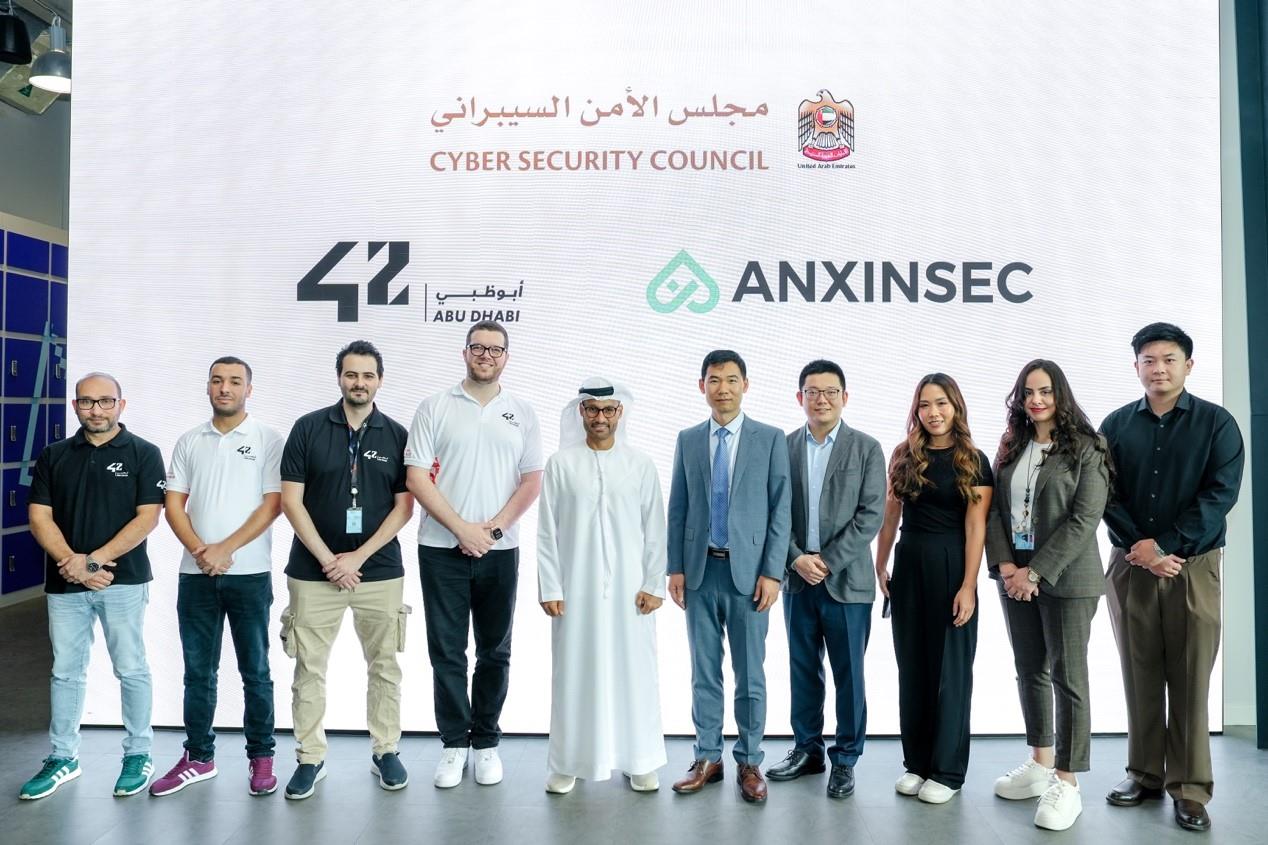
Abu Dhabi, United Arab Emirates: On December 21st, a highly successful Cyber Security Workshop was held, organized by 42 Abu Dhabi , Cyber Security Council and ANXINSEC. The workshop, titled “Navigating the Future: Cyber Security in a Digital Age”.The event brought together Anxinsec's cybersecurity professionals and passionate students from 42 Abu Dhabi to delve into topics in the field.

The workshop's highlight was H.E. Dr. Mohamed Al Kuwaiti, Head of Cyber Security Council UAE, delivering a captivating keynote on cybersecurity's Strategic Vision. Emphasizing our commitment to a resilient cyber ecosystem, Dr. Al Kuwaiti stressed the importance of sharing experiences, fostering continuous learning, and cultivating innovation to address cybersecurity challenges and equip future leaders with essential skills.

H.E. Dr. Mohamed Al Kuwaiti, said: “Collaborating with 42 Abu Dhabi and Anxinsec is a significant step towards promoting an understanding of cyber threats among students and the future generation of digital leaders. Our objective is to empower them with the knowledge and tools necessary for driving a secure future for the UAE.”

Marcos Muller Habig,  Acting CEO of 42 Abu Dhabi, said: “Through our disruptive learning methodology and workshops with key stakeholders like the UAE Cyber Security Council and Anxinsec, we are determined to pave the way for a more secure digital future ”.

Anxinsec’s  security specialist team comprising shared their knowledge and experiences in sessions focusing on "AI in Cybersecurity" and effective strategies against ransomware attacks. Attendees had the chance to exchange ideas, share best practices, and establish valuable connections within the cybersecurity community.

Alex Jiang, Chairman of Anxinsec said: “It was a great pleasure to collaborate with UAE Cyber Security Council and 42 Abu Dhabi. Anxinsec commitment extends beyond providing cutting-edge defence products and services; we are dedicated to fostering a culture of security mindfulness. This endeavor is not just about technology, it’s about protecting our way of life in the digital age.”

Anxinsec, a renowned cybersecurity company specializing in protecting critical information infrastructure, is dedicated to social responsibility as it actively contributes to the cybersecurity community. Its involvement further solidifies the workshop as a hub for industry professionals to exchange insights and collectively advance the field of cybersecurity.

*Source: AETOSWire
Contacts:
Moira Yang
Email: marketing@anxinsec.com

A highly successful Cyber Security Workshop titled "Navigating the Future: Cyber Security in a Digital Age" was recently held in Abu Dhabi, United Arab Emirates. The workshop, organized by 42 Abu Dhabi, Cyber Security Council, and ANXINSEC, brought together cybersecurity professionals from ANXINSEC and passionate students from 42 Abu Dhabi to discuss various topics in the field.

One of the highlights of the workshop was a captivating keynote delivered by H.E. Dr. Mohamed Al Kuwaiti, Head of Cyber Security Council UAE, on cybersecurity's Strategic Vision. Dr. Al Kuwaiti emphasized the importance of sharing experiences, continuous learning, and innovation to address cybersecurity challenges and equip future leaders with essential skills. He expressed his belief that collaborating with 42 Abu Dhabi and ANXINSEC is a significant step towards promoting an understanding of cyber threats among students and future digital leaders.

Marcos Muller Habig, Acting CEO of 42 Abu Dhabi, stated that through their disruptive learning methodology and workshops with key stakeholders like the UAE Cyber Security Council and ANXINSEC, they are determined to pave the way for a more secure digital future.

During the workshop, ANXINSEC's security specialist team shared their knowledge and experiences in sessions focusing on "AI in Cybersecurity" and effective strategies against ransomware attacks. Attendees had the opportunity to exchange ideas, share best practices, and establish valuable connections within the cybersecurity community.

Alex Jiang, Chairman of ANXINSEC, expressed his pleasure in collaborating with the UAE Cyber Security Council and 42 Abu Dhabi. He highlighted ANXINSEC's commitment to fostering a culture of security mindfulness and protecting our way of life in the digital age.

ANXINSEC, a renowned cybersecurity company specializing in protecting critical information infrastructure, actively contributes to the cybersecurity community and is dedicated to social responsibility. Their involvement in the workshop further solidifies it as a hub for industry professionals to exchange insights and collectively advance the field of cybersecurity.

(Source: AETOSWire)

Exploring Strategic Vision and AI in Cybersecurity: Insights from a Successful Cyber Security Workshop

(MENAFN- AETOSWire)

On December 21st, a highly successful Cyber Security Workshop was held, organized by 42 Abu Dhabi , Cyber Security Council and ANXINSEC. The workshop, titled“Navigating the Future: Cyber Security in a Digital Age”.The event brought together Anxinsec's cybersecurity professionals and passionate students from 42 Abu Dhabi to delve into topics in the field.

The workshop's highlight was H.E. Dr. Mohamed Al Kuwaiti, Head of Cyber Security Council UAE, delivering a captivating keynote on cybersecurity's Strategic Vision. Emphasizing our commitment to a resilient cyber ecosystem, Dr. Al Kuwaiti stressed the importance of sharing experiences, fostering continuous learning, and cultivating innovation to address cybersecurity challenges and equip future leaders with essential skills.

H . E. Dr. Mohamed Al Kuwaiti, said:“Collaborating with 42 Abu Dhabi and Anxinsec is a significant step towards promoting an understanding of cyber threats among students and the future generation of digital leaders. Our objective is to empower them with the knowledge and tools necessary for driving a secure future for the UAE.”

Marcos Muller Habig, Acting CEO of 42 Abu Dhabi , said:“Through our disruptive learning methodology and workshops with key stakeholders like the UAE Cyber Security Council and Anxinsec, we are determined to pave the way for a more secure digital future”.

Anxinsec's security specialist team comprising shared their knowledge and experiences in sessions focusing on "AI in Cybersecurity" and effective strategies against ransomware attacks. Attendees had the chance to exchange ideas, share best practices, and establish valuable connections within the cybersecurity community.

Alex Jiang, Chairman of Anxinsec said :“It was a great pleasure to collaborate with UAE Cyber Security Council and 42 Abu Dhabi. Anxinsec commitment extends beyond providing cutting-edge defence products and services; we are dedicated to fostering a culture of security mindfulness. This endeavor is not just about technology, it's about protecting our way of life in the digital age.”

Anxinsec, a renowned cybersecurity company specializing in protecting critical information infrastructure, is dedicated to social responsibility as it actively contributes to the cybersecurity community. Its involvement further solidifies the workshop as a hub for industry professionals to exchange insights and collectively advance the field of cybersecurity.

Permalink

MENAFN29122023004146001356ID1107668875

Legal Disclaimer:
MENAFN provides the information “as is” without warranty of any kind. We do not accept any responsibility or liability for the accuracy, content, images, videos, licenses, completeness, legality, or reliability of the information contained in this article. If you have any complaints or copyright issues related to this article, kindly contact the provider above.

A highly successful Cyber Security Workshop titled "Navigating the Future: Cyber Security in a Digital Age" was held on December 21st. The workshop was organized by 42 Abu Dhabi, Cyber Security Council, and ANXINSEC, bringing together cybersecurity professionals from Anxinsec and passionate students from 42 Abu Dhabi to discuss various topics in the field.

The highlight of the workshop was a captivating keynote delivered by H.E. Dr. Mohamed Al Kuwaiti, Head of Cyber Security Council UAE, on cybersecurity's Strategic Vision. Dr. Al Kuwaiti emphasized the importance of sharing experiences, continuous learning, and innovation in addressing cybersecurity challenges and equipping future leaders with essential skills. He expressed his commitment to a resilient cyber ecosystem.

H.E. Dr. Mohamed Al Kuwaiti stated, "Collaborating with 42 Abu Dhabi and Anxinsec is a significant step towards promoting an understanding of cyber threats among students and the future generation of digital leaders. Our objective is to empower them with the knowledge and tools necessary for driving a secure future for the UAE."

Marcos Muller Habig, Acting CEO of 42 Abu Dhabi, expressed their determination to pave the way for a more secure digital future through their disruptive learning methodology and workshops with key stakeholders like the UAE Cyber Security Council and Anxinsec.

During the workshop, Anxinsec's security specialist team shared their knowledge and experiences in sessions focusing on "AI in Cybersecurity" and effective strategies against ransomware attacks. Attendees had the opportunity to exchange ideas, share best practices, and establish valuable connections within the cybersecurity community.

Alex Jiang, Chairman of Anxinsec, expressed his pleasure in collaborating with the UAE Cyber Security Council and 42 Abu Dhabi. He emphasized that their commitment extends beyond providing cutting-edge defense products and services, as they are dedicated to fostering a culture of security mindfulness to protect our way of life in the digital age.

Anxinsec, a renowned cybersecurity company specializing in protecting critical information infrastructure, actively contributes to the cybersecurity community and solidifies the workshop as a hub for industry professionals to exchange insights and collectively advance the field of cybersecurity.

Please note that MENAFN provides the information "as is" without warranty of any kind. They do not accept responsibility or liability for the accuracy, content, images, videos, licenses, completeness, legality, or reliability of the information contained in this article. For any complaints or copyright issues related to this article, kindly contact the provider mentioned above.

Israel's Cyber Security Head Reveals Extensive Internet Monitoring

Q/ Does Israel monitor its cyber space?

A/ As part of a common cyber security practice in the world, the Israel National Cyber Directorate (INCD) is scanning the entire Israeli cyber space 24x7 for anything in the outer perimeter of the entities using the cyber space, which means everything that is launched to the internet is being monitored, similar to the neighbourhood security watch looking for open windows and alerting neighbours to be careful of burglars. By doing so, we find a lot of vulnerabilities in systems, which helps us call those entities, [for instance] small and medium enterprises, and tell them they are exposed to an attack through this vector of entrance and ask them to patch it up or close it. We expect them to follow our advice and we have a huge success in it.

Q/ The Iron Dome has become synonymous with Israel’s defence capabilities. What is the vision for the Cyber Dome?

A/ The Cyber Dome is the future for cyber defence. Just like we have the Iron Dome, the Cyber Dome is a multilayered process or programme because cyber is a multilayered attack vector. We need to cover the basics [and] right up to the highest level [like] critical infrastructure. This is being done [with] the Cyber Dome—a humongous project with a lot of partners and enterprises. I will say we are half way there, but the good news is that we are half way there. I believe it will bring a change in the Israeli cyber sphere.

Q/ CERT (the Israeli Cyber Emergency Response Team) is mainly defensive while other agencies have offensive capabilities. How do you ensure privacy of citizens between the two?

A/ The INCD deals with defence only. But regarding privacy, I will say something hard to digest. There is no more privacy in the world because our information is out there and, therefore, I tell people, be responsible with what you post and your own phone. Because privacy is something hard to keep and people voluntarily put a lot of private information on the net without realising it. Privacy has to be a personal responsibility and everyone should be responsible for their own private information. Whatever you have to give away, do it in a secure way.

Q/ What is the cyber security architecture in place in Israel?

A/ In Israel, there is a law for critical infrastructure alone which measures if they are compatible to the set of rules that we have established for them. There is a special methodology in place and these critical infrastructures are obliged to match up to the standards that we decide. The essential services, which is one level below, are under the regulators’ authority, which are the government offices and ministries, who decide the level of protection needed.

The INCD is in the process of trying to pass a bill that will enable the regulators to set standards to ensure better protection of their entities. The INCD will supervise and assist them. So, the Israeli law divides what is under the direct supervision of the INCD and what is under the government offices and we are continuously working to raise the robustness and resilience of every essential entity.

Q/ The INCD comes under the prime minister. How does it insulate itself from, say, political pressures or interests?

A/ The INCD is a professional organisation that deals only with cyber defence and is not a political organisation. This means that our prime minister is in charge of this entity, but does not give us our working programme. In my seven-and-a-half years here, we have never encountered political requests or something opposed to our professional opinion.

Israel is a strong democracy and it will stay that way and this includes the work done by our agencies. For instance, during elections where the prime minister is one of the candidates the responsibility of INCD goes to a nominated judge.

Q/ How do you stop countries like China from appropriating Israeli technology? Has that been a concern?

A/ Firstly, Israeli technology and developments within are guarded safely. There is an entity that is responsible for all the expertise and knowledge in Israel and protecting every validated technology or information that leaves Israel. If a country is dealing with cyber espionage in order to steal information, I believe it is a worldwide disease and we are doing the best we can to protect against that now. It does not matter what the purpose of the attack is; it can be for distraction or espionage. We are defending against any threat, 360 degrees, and that includes espionage or stealing our systems.

Q/ What is the strength of Israel's cyber army of Israel, if I may call it that?

A/ The INCD is a relatively small agency consisting of 350 people, but there are a lot of other agencies, including those dedicated to cyber warfare, offensive and defensive. Then there are units in the army and other agencies. In almost all security agencies in Israel there is a cyber division or the organisation has dedicated technology for it. So, while we can’t put a finger on the numbers, there is a lot of manpower today dealing with the cyber dimension of warfare which, as I said, is a new dimension we have to take care of now.

Q/ How is the collaboration of CERT with CERT-India?

A/ The INCD has relations with more than 90 countries and India is one of them. We have a good cooperation with the Indian CERT and we regularly share information, indicators of compromise and, many times, when there is an attack on Israel, we pass on the information with all our partners, including India, so that they can be prepared for the same incident. The cooperation in information sharing is on a daily basis.

We invite every country to share any problem they encounter with Israeli CERT and we will try to provide the assistance of our incident response teams and analysts.

Cyber is a global war and it does not affect only one country. Today, if the attackers are at my borders, tomorrow they will be thousands of kilometres away, attacking another country. We are ready to assist anyone, because tomorrow we will need that assistance as well.

Israel's Cyber Security Practices: An Informative Perspective

Israel's approach to cyber security involves constant monitoring of its cyber space by the Israel National Cyber Directorate (INCD). This practice is in line with global cyber security standards and aims to identify vulnerabilities in systems. Similar to a neighborhood watch, the INCD scans the entire Israeli cyber space 24x7, alerting entities to potential threats and advising them on how to patch or close vulnerabilities. This proactive approach has been successful in ensuring the security of small and medium enterprises.

The vision for Israel's cyber defense is the Cyber Dome, which is comparable to the well-known Iron Dome. The Cyber Dome is a comprehensive program that addresses the multi-layered nature of cyber attacks. It covers everything from basic security measures to critical infrastructure protection. While the project is still in progress, it is expected to bring significant changes to Israel's cyber sphere.

The Israeli Cyber Emergency Response Team (CERT) focuses on defensive measures, while other agencies handle offensive capabilities. To ensure privacy between these two realms, the INCD emphasizes personal responsibility. It acknowledges that privacy is becoming increasingly challenging in today's interconnected world, as individuals willingly share private information online. The INCD advises individuals to be cautious about what they post and how they share information.

Israel has established a cyber security architecture that includes specific laws and regulations for critical infrastructure. These infrastructures must adhere to set rules and standards determined by the INCD. Essential services, which are one level below critical infrastructure, are under the authority of government offices and ministries. The INCD is working on passing a bill that will enable regulators to set standards for better protection of entities, with the INCD providing supervision and assistance.

Despite being under the prime minister's authority, the INCD operates independently from political pressures or interests. It is a professional organization solely focused on cyber defense. During elections, when the prime minister is a candidate, the responsibility of the INCD is transferred to a nominated judge to ensure impartiality.

Protecting Israeli technology from countries like China is a priority. Israel has measures in place to safeguard its expertise and knowledge, ensuring that validated technology or information leaving the country is protected. The INCD acknowledges that cyber espionage is a global issue and is committed to defending against all threats, including espionage and system breaches.

The INCD consists of 350 people, making it a relatively small agency. However, there are numerous other agencies, army units, and divisions dedicated to cyber warfare in Israel. The country has a significant amount of manpower dedicated to addressing the cyber dimension of warfare.

Israel collaborates with more than 90 countries, including India, through its CERT. Information sharing is a regular practice, with indicators of compromise and attack information being shared to enhance preparedness. Israel encourages countries to reach out to its CERT for assistance, as cyber warfare is a global challenge that requires collective efforts.

In conclusion, Israel's approach to cyber security involves proactive monitoring, collaboration with international partners, and a focus on personal responsibility for privacy. The country is committed to defending against cyber threats and ensuring the robustness and resilience of its critical entities.

Operational Challenges Faced by Eagers Automotive in Australia Following Cyber Security Incident

(Reuters) - Australia's Eagers Automotive said on Friday a cyber incident impacting some of its IT systems is affecting the company's ability to finalise transactions for certain new vehicles, which have been sold and ready for delivery.

Corporate Australia has seen an alarming rise in cyber security breaches since last year, even prompting the country's government to reform cyber security rules. Australia set up an agency in February this year to oversee government investment and help coordinate responses to hacker attacks.

Eagers said the extent of the operational impact varied across regions and business units in Australia and New Zealand.

The financial impact of the cyber incident for fiscal 2023 primarily relates to the deferral in the recognition of these transactions across the last five days of December, the automotive retailer said in a statement.

The deferred transactions are expected to hit the company's statutory profit before tax for fiscal 2023, although it is not expected to be material, Eagers said.

"The deferred transactions are expected to be recognised in the 2024 financial year once they have been appropriately finalised within our systems," the company said.

Eagers, however, remains confident that it will deliver record underlying operating profit before tax for the 2023 financial year.

(Reporting by Roushni Nair in Bengaluru; Editing by Shounak Dasgupta and Subhranshu Sahu)

Australia's Eagers Automotive has announced that a cyber incident has impacted its IT systems, causing delays in finalizing transactions for certain new vehicles that have already been sold and are ready for delivery. This incident is part of a concerning trend of cyber security breaches in corporate Australia, leading to government reforms in cyber security rules. In response, Australia established an agency earlier this year to oversee government investment and coordinate responses to hacker attacks.

Eagers Automotive stated that the operational impact of the cyber incident varies across different regions and business units in Australia and New Zealand. The financial impact for fiscal 2023 primarily stems from the deferral in recognizing these transactions during the last five days of December. However, the company believes that this deferral will not have a significant effect on its statutory profit before tax for fiscal 2023.

The company assured that the deferred transactions will be recognized in the 2024 financial year once they have been appropriately finalized within their systems. Despite this setback, Eagers Automotive remains confident in delivering a record underlying operating profit before tax for the 2023 financial year.

This article was reported by Roushni Nair in Bengaluru and edited by Shounak Dasgupta and Subhranshu Sahu.

Palo Alto Networks Successfully Acquires Talon Cyber Security and Introduces Complimentary Enterprise Browser

SANTA CLARA, Calif., Dec. 28, 2023 -- Palo Alto Networks today announced that it has completed the acquisition of Talon Cyber Security, a pioneer of enterprise browser technology.

"We are thrilled to welcome Talon to Palo Alto Networks," said Nikesh Arora, chairman and CEO of Palo Alto Networks. "Most work today occurs via web browsers, often on unmanaged devices, which poses enormous security risks. Through the seamless integration of Talon's Enterprise Browser with Prisma SASE, we will be elevating our best-in-class solution that helps provide ironclad security and data protection for all users across all applications and from any device or location. Additionally, we plan to extend Talon's cutting-edge Enterprise Browser technology to our qualified SASE AI customers at no additional cost." 

In today's evolving threat landscape, employees frequently use personal and unmanaged devices to access critical business applications, including using mobile devices alongside corporate laptops. While this approach increases productivity, the lack of consistent security, control and visibility across devices increases security risk.

To tackle these challenges, organizations need a holistic SASE solution that securely enables users to access vital business applications regardless of their chosen device. As part of that SASE solution, Talon's Enterprise Browser will provide additional layers of protection against phishing attacks, web-based attacks and malicious browser extensions.

Talon also offers extensive controls to help ensure that sensitive data does not escape the confines of the browser, regardless of whether the enterprise manages the device.

Palo Alto Networks Prisma SASE is the secure foundation for agile, cloud-enabled organizations. Integrating Talon with Prisma Access can provide customers with substantial productivity benefits by enabling unmanaged devices, but also ensures consistent security and deeper visibility into device usage, all while preserving user privacy.

This acquisition reinforces Prisma SASE's position as the most complete single-vendor SASE solution, enabling customers to adopt a unified SASE approach for complete Zero Trust security. Prisma SASE, along with the Enterprise Browser, are paramount to securing all web applications — public and private — and all devices, both managed and unmanaged.

Learn more about the Talon acquisition here.
Follow Palo Alto Networks on Twitter, LinkedIn, Facebook and Instagram.

The offer of complimentary Talon Enterprise Browser for Palo Alto Networks' qualified SASE AI customers will be available soon.

Palo Alto Networks has recently completed the acquisition of Talon Cyber Security, a leading enterprise browser technology company. This acquisition aims to enhance Palo Alto Networks' security solutions by integrating Talon's Enterprise Browser with Prisma SASE. The integration will provide robust security and data protection for users across all applications and devices.

In today's digital landscape, employees often use personal and unmanaged devices to access critical business applications, which poses significant security risks. To address this challenge, organizations require a comprehensive Secure Access Service Edge (SASE) solution that enables secure access to business applications regardless of the device used. Talon's Enterprise Browser will play a crucial role in this solution by offering additional layers of protection against phishing attacks, web-based attacks, and malicious browser extensions. It also provides controls to prevent sensitive data from leaving the browser, even on unmanaged devices.

Palo Alto Networks' Prisma SASE serves as a secure foundation for agile and cloud-enabled organizations. By integrating Talon with Prisma Access, customers can enjoy increased productivity while maintaining consistent security and visibility into device usage. This acquisition solidifies Prisma SASE's position as the most comprehensive single-vendor SASE solution, enabling customers to adopt a unified Zero Trust security approach. With Prisma SASE and the Enterprise Browser, organizations can secure all web applications, both public and private, on managed and unmanaged devices.

For more information about the Talon acquisition, visit Palo Alto Networks' blog. Stay updated with Palo Alto Networks on Twitter, LinkedIn, Facebook, and Instagram.

It is worth noting that Palo Alto Networks plans to offer the Talon Enterprise Browser to qualified SASE AI customers at no additional cost in the near future.

The Future of Cyber Security Jobs in India: A Look at the Top 10 Roles in 2024

Cyber Security Jobs

Top 10 Cyber Security Jobs In India In 2024

In the vast realm of IT jobs, cybersecurity roles are gaining prominence due to the escalating threat of cyber-attacks in our increasingly connected world. While more traditional IT roles like network administrators and software developers are well-known, cybersecurity jobs are emerging as a critical line of defense against hacking and data breaches.

How to Become a Cybersecurity Professional?

The demand for cybersecurity jobs in India is currently on the rise, reflecting the growing need for digital protection. To embark on a successful career in cybersecurity, unconventional thinking and a proactive approach are essential. While cybersecurity is a relatively new field in the IT sector, there are diverse paths to becoming a cybersecurity professional.

Aspiring individuals typically need a bachelor's degree in computer science, IT systems, engineering, programming, or related fields. However, some companies are adapting to alternative hiring approaches, giving weight to cybersecurity training and certifications. Acquiring technical experience and mastering coding languages like Python, Java, HTML, and C++ are also valuable steps. Crucially, a solid grasp of cybersecurity fundamentals and an understanding of industry requirements are pivotal for those seeking a meaningful start in their cybersecurity career. Thorough research and practical application of these fundamentals can provide a significant head start in this dynamic and vital field.

Top Cyber Security Jobs in India:

1. Network Security Engineer

In this role, whether you're starting your career or have experience, you play a vital part in safeguarding a company's digital assets from threats. Your responsibilities include designing, implementing, and maintaining robust security systems for the organization. Your expertise in IT networking, programming, and knowledge of cyber laws are crucial. You'll focus on firewall design, configuration, maintenance, and administration. Certification paths like CISSP, CompTIA Security+, CEH v11, and CCSP are valuable for this role.

2. Cyber Security Analyst

As a Cyber Security Analyst, your primary task is implementing security systems to counter and stop threats. You'll identify vulnerabilities in the system and ensure the overall maintenance of security systems. Holding a degree in computer science, cybersecurity, or a related field is essential. Proficiency in proprietary network management, data encryption, and firewall design is vital. Certifications like CISSP and CompTIA Security+ enhance your profile for this role.

3. Security Architect

Security Architects are responsible for developing the architecture for computer and network security in an organization. This role involves researching, planning, and designing security elements. A bachelor's degree in computer science and a master's in cybersecurity are beneficial. Your expertise should include TCP/IP network and networking security knowledge, risk management, and protocol encryption. Certifications such as GIAC Defensible Security Architect, CompTIA Network+, and ISC's ISSAP add value.

4. Cyber Security Manager

As a Cyber Security Manager, you're in charge of managing and implementing action plans when facing IT issues and network breaches. Your role involves planning and executing management protocols to counter and solve software and network threats. A bachelor's degree in IT engineering, cybersecurity, or related fields is necessary. Skills in proprietary network management, data encryption, and firewall design are essential. Certifications like CISSP, CISA, GSLC, CISM, and CISSP-ISSMP are beneficial.

5. Chief Information Security Officer (CISO)

As a CISO, you're a senior-level executive ensuring that the cybersecurity plan aligns with the business’s vision. You work to identify, develop, implement, and maintain processes to prevent security breaches. Collaborating with staff, setting up standards and controls, and overseeing security policies are your key responsibilities.

6. Information Security Manager

Information Security Managers focus on detecting and preventing cyber threats within the company’s data, computers, and networks. They ensure that sensitive customer information is protected, preventing violations of data protection laws.

7. Cybersecurity Engineer

Cybersecurity Engineers create and execute secure network solutions, playing a crucial role in strengthening technology initiatives.

8. Application Security Engineer

Application Security Engineers ensure the stability of internal and external applications, dealing with the privacy and compliance aspects of third-party applications.

9. Ethical Hackers

Ethical Hackers reveal vulnerabilities in networks, systems, and applications, providing insider information to protect organizations from cyberattacks.

10. Incident Manager

Incident Managers resolve security incidents by determining appropriate resources and proficiencies. This executive-level role requires leadership and problem-solving abilities.

How Much Do Cybersecurity Professionals Earn?

The cybersecurity sector in India is thriving, propelled by a growing number of companies and heightened demand for skilled professionals. Nevertheless, salaries in the Indian cybersecurity landscape vary for newcomers and seasoned practitioners, contingent on academic credentials and practical experience. On average, Cyber Security positions in India command an annual salary of ₹600,000. The pay scale fluctuates across diverse roles, dictated by the specific skill set and experience one brings to the forefront.

Title: Top 10 Cyber Security Jobs in India in 2024

In the rapidly evolving field of IT, cybersecurity roles are becoming increasingly important due to the rising threat of cyber-attacks in our interconnected world. While traditional IT roles like network administrators and software developers are well-known, cybersecurity jobs are emerging as a crucial line of defense against hacking and data breaches.

To pursue a successful career in cybersecurity, it is essential to think unconventionally and adopt a proactive approach. Although cybersecurity is a relatively new field in the IT sector, there are various paths to becoming a cybersecurity professional.

Typically, aspiring individuals need a bachelor's degree in computer science, IT systems, engineering, programming, or related fields. However, some companies are now considering alternative hiring approaches that prioritize cybersecurity training and certifications. Gaining technical experience and mastering coding languages like Python, Java, HTML, and C++ are also valuable steps. A solid understanding of cybersecurity fundamentals and industry requirements is crucial for those starting their cybersecurity careers. Conducting thorough research and applying these fundamentals in practice can provide a significant advantage in this dynamic and vital field.

Here are the top 10 cyber security jobs in India:

1. Network Security Engineer: In this role, you play a vital part in safeguarding a company's digital assets from threats by designing, implementing, and maintaining robust security systems. Expertise in IT networking, programming, and knowledge of cyber laws are crucial.

2. Cyber Security Analyst: As a Cyber Security Analyst, your primary task is implementing security systems to counter and stop threats. Holding a degree in computer science, cybersecurity, or a related field is essential.

3. Security Architect: Security Architects are responsible for developing the architecture for computer and network security in an organization. This role involves researching, planning, and designing security elements.

4. Cyber Security Manager: As a Cyber Security Manager, you're in charge of managing and implementing action plans when facing IT issues and network breaches. Planning and executing management protocols to counter and solve software and network threats are key responsibilities.

5. Chief Information Security Officer (CISO): As a CISO, you ensure that the cybersecurity plan aligns with the business's vision. You work to identify, develop, implement, and maintain processes to prevent security breaches.

6. Information Security Manager: Information Security Managers focus on detecting and preventing cyber threats within the company's data, computers, and networks.

7. Cybersecurity Engineer: Cybersecurity Engineers create and execute secure network solutions, playing a crucial role in strengthening technology initiatives.

8. Application Security Engineer: Application Security Engineers ensure the stability of internal and external applications, dealing with the privacy and compliance aspects of third-party applications.

9. Ethical Hackers: Ethical Hackers reveal vulnerabilities in networks, systems, and applications, providing insider information to protect organizations from cyberattacks.

10. Incident Manager: Incident Managers resolve security incidents by determining appropriate resources and proficiencies. This executive-level role requires leadership and problem-solving abilities.

In terms of salaries, the cybersecurity sector in India is thriving. However, the pay scale varies for newcomers and experienced professionals based on academic credentials and practical experience. On average, cybersecurity positions in India command an annual salary of ₹600,000. The specific skill set and experience one brings to the forefront also influence the pay scale across diverse roles.

In conclusion, cybersecurity jobs in India are in high demand due to the increasing need for digital protection. Pursuing a career in this field requires a combination of education, technical skills, and a solid understanding of cybersecurity fundamentals. With the right qualifications and experience, individuals can thrive in the dynamic and rewarding field of cybersecurity.

What to Expect in Cybersecurity: A Look into the Future of 2023

Companies in 2023 saw rising cybersecurity threats, rising regulation and rising costs for cyber insurance, while dealing with tight budgets and a tighter labor market. 

The year ahead will bring no letup. 

Copyright ©2023 Dow Jones & Company, Inc. All Rights Reserved. 87990cbe856818d5eddac44c7b1cdeb8

Title: Cybersecurity Challenges Continue to Rise in 2023

Date: Dec. 27, 2023

Source: WSJ Pro

In 2023, companies faced a multitude of challenges in the realm of cybersecurity. These challenges included an increase in cybersecurity threats, stricter regulations, and higher costs for cyber insurance. Additionally, companies had to navigate these obstacles while operating within tight budgets and a competitive labor market.

Looking ahead to the coming year, it is clear that the cybersecurity landscape will not ease up. The need for robust cybersecurity measures and strategies will remain a top priority for businesses across various industries.

It is crucial for companies to stay vigilant and proactive in addressing cybersecurity threats. By implementing effective security measures, staying informed about emerging threats, and investing in employee training, organizations can enhance their resilience against cyber attacks.

As technology continues to advance, so do the tactics employed by cybercriminals. Therefore, it is essential for companies to continuously update their cybersecurity protocols and stay ahead of evolving threats.

In conclusion, the challenges posed by cybersecurity threats, regulations, and costs are expected to persist in the year ahead. Companies must prioritize cybersecurity and take proactive measures to protect their sensitive data and systems from potential breaches. By doing so, they can mitigate risks and safeguard their operations in an increasingly digital world.

© 2023 Dow Jones & Company, Inc. All Rights Reserved.

Flood IT Support
Privacy Overview

This website uses cookies so that we can provide you with the best user experience possible. Cookie information is stored in your browser and performs functions such as recognising you when you return to our website and helping our team to understand which sections of the website you find most interesting and useful.